

Services / SEO & AI Visibility
Search has two surfaces now. We build for both.
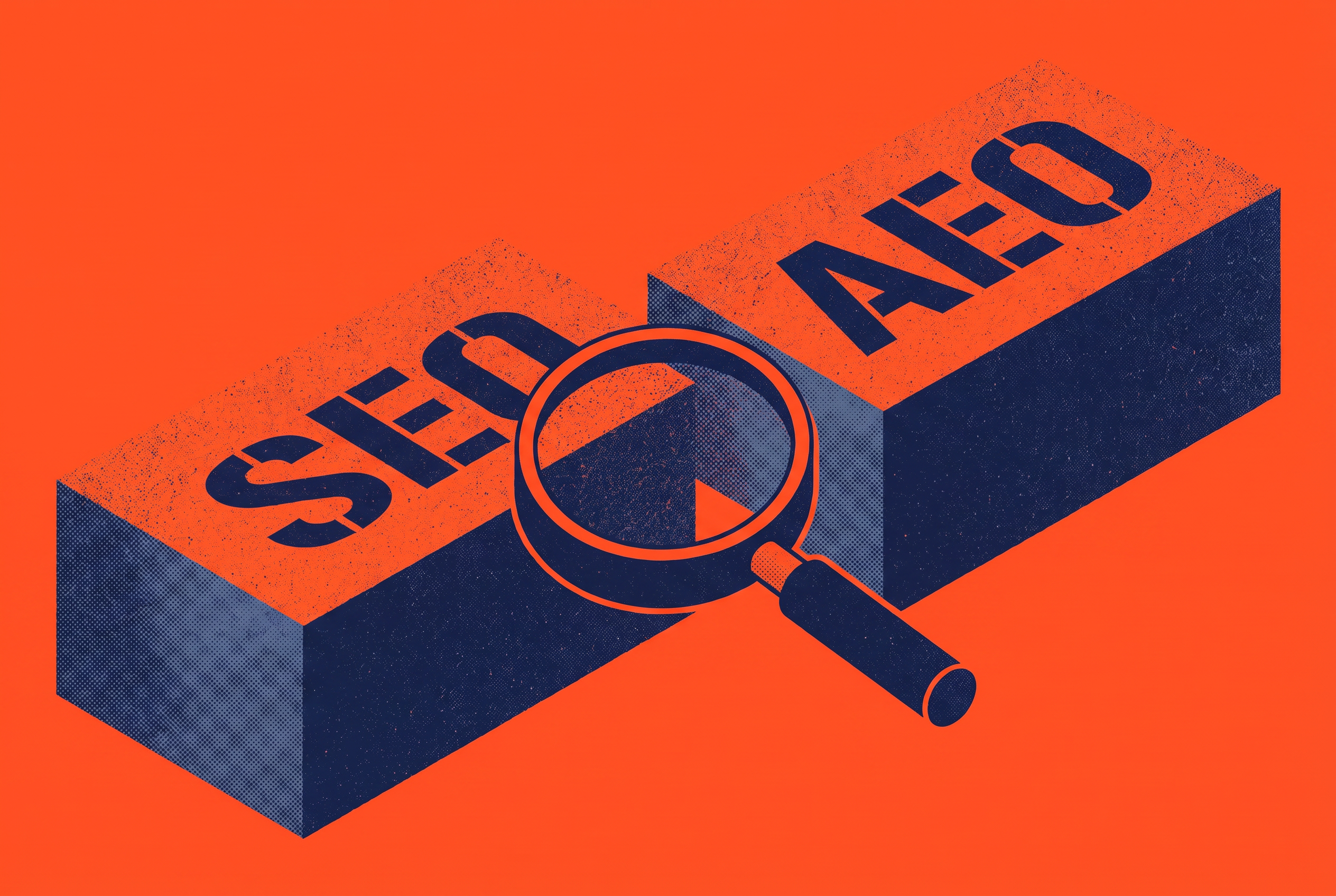
People still search Google. They also ask ChatGPT, Perplexity, and AI Overviews — which answer by citing a handful of sources. Ranking and getting cited are related but not identical jobs, and the infrastructure that wins both is the same underneath: clean structure, real schema, crawlable content, and information worth citing.
Let's build somethingWhat we build
The technical foundation both surfaces read from.
Structured data

Structured data
Site architecture
Site architecture
Crawlability and rendering

Crawlability and rendering
Core Web Vitals
Core Web Vitals
Feed and catalog optimization

Feed and catalog optimization
Migrations

Two surfaces, one foundation
The unit and the reward differ. The foundation underneath does not.
Signal
Classic search
AI answers
Primary unit
The ranked page
The cited source
Rewards
Relevance and links
Extractability and originality
Structure
Headings and internal links
Direct answers, clean schema
Fatal flaw
Slow, thin pages
Content a crawler cannot read
Proof: migrating without the loss
Re-platforming is where most brands quietly bleed organic traffic.
On a specialty retailer’s move from Magento to Shopify, we ran a scripted pipeline that produced 99.96% product-migration success, mapped 38,708 redirects so no indexed URL was lost, and rebuilt 277 collections automatically.
Product-migration success — near-zero data loss across the full catalog.
URL redirects mapped so no indexed URL lost its ranking equity.
Questionsbuyersask
I've worked with Lightdrop on multiple projects over the last 5 years and am always amazed with the level of strategy, guidance and execution they bring to the table. Lior and his team are masters in digital and brand marketing.

Ron Levi
Chief Content Officer and Founder, DOGTV



Ready to be found on both surfaces?
Schema, structure, speed, and migrations that protect rankings — built so Google ranks you and AI cites you.
Let's build somethingRelated services
View all →Approvedagencyprovideracrosstheplatformsyouknow:


Meta

Shopify

BigCommerce

Mailchimp

HubSpot

Klavio
